Loose & strict standards of “no illicit sex."
Thought For the Day
The Ultimate Self Realization Course
"Godhead is light. Nescience is darkness. Where there is Godhead there is no nescience."
Note: This is not written by artificial intelligence. It is
written by a real person who truly cares about you
Here's the Loose and Strict Standards of "No Illicit Sex"
December 2, 2025
Srila Prabhupada usually defines "no illicit sex" as "no sex outside of marriage" and not as often says that sex is restricted as follows:Only for procreation after getting the spiritual master's blessings to try for a childCan only be once in month 4-6 days after woman's menstrual cycle (This is when she is most likely to get pregnant.)
Only after the husband and wife have chanted at least 50 rounds of japa
The loose standard of "no illicit sex" is widely accepted in ISKCON. Thus, we would like to point out to our friends, the "looseys", that if we apply the same logic to "no meat eating" what will be the result.
Srila Prabhupada usually says "no meat eating" and only sometimes says "no meat, fish, or eggs". Thus if we accept a similar loose method of understanding the food standard we can conclude that it is okay to eat fish and eggs.
Thus I request all of my disciples, students, and readers to intelligently analyze which standard is correct: the loose standard or the strict standard in the light of this statement from Srila Prabhupada:
Those who strictly follow the rules and regulations of householder life engage in sex only once a month, at the end of the menstrual period. (purport to Srimad Bhagavatam Fifth Canto, Chapter 13, Text 4)
It can also be pointed out that those who follow the strict standard will get children who are very much inclined for Krishna consciousness. This is because the state of mind of the parents at the time on conception affects what sort of child will be born.
Thank you for giving your attention to this important matter.
Sankarshan Das Adhikari
Blissful Householders

Urgent! Please Help Us Make the World Krishna Conscious.
Donate Now by Clicking HereDandavat Pranams.
All glories to Srila Prabhupada, to you, and to Guru Mataji.
What is Yukta vairagya and phalgu vairagya?
Your insignificant servant, Gaurav
From: C. Sambhaji Nagar, Maharashtra, India
Answer
From: ISKCON Pune, India
My Dear Gaurav,
Please accept my blessings.
All glories to Śrīla Prabhupāda.
Srila Rupa Goswami has very accurately describes yukta vairgya and phalgu vairagya in the Bhakti-rasāmṛta-sindhu. In Bhakti-rasāmṛta-sindhu 1.2.255 he describes yukta vairagya:
anāsaktasya viṣayān
yathārham upayuṣjataḥ
nirbandhaḥ kṛṣṇa-sambandhe
yuktaṁ vairāgyam ucyate
Rūpa Gosvāmī says that as long as we are in this material world we have to act; we cannot cease acting. Therefore if actions are performed and the fruits are given to Kṛṣṇa, that is called yukta-vairāgya.
Then in the next verse (Bhakti-rasāmṛta-sindhu 1.2.256) in addition to yukta vairagya he mentions phalgu vairagya:
prāpaṣcikatayā buddhyā
hari-sambandhi-vastunaḥ
mumukṣubhiḥ parityāgo
vairāgyaṁ phalgu kathyate
"When one is not attached to anything, but at the same time accepts everything in relation to Kṛṣṇa, one is rightly situated above possessiveness. On the other hand, one who rejects everything without knowledge of its relationship to Kṛṣṇa is not as complete in his renunciation."
Yukta vairgya is when one is not attached to anything, but at the same time accepts everything in relation to Kṛṣṇa. This is being rightly situated above possessiveness.
And phalgu vairagya is when one rejects everything without knowledge of its relationship to Kṛṣṇa. This is being not as complete in renunciation. Yutka vairagya is the perfection of renunciation and phalgu vairagya is imperfect renunciation.
I hope this meets you in the best of health and in a cheerful mood.
Your ever well-wisher,
Sankarshan Das Adhikari
My Dear Gaurav,
Please accept my blessings.
All glories to Śrīla Prabhupāda.
Srila Rupa Goswami has very accurately describes yukta vairgya and phalgu vairagya in the Bhakti-rasāmṛta-sindhu. In Bhakti-rasāmṛta-sindhu 1.2.255 he describes yukta vairagya:
anāsaktasya viṣayān
yathārham upayuṣjataḥ
nirbandhaḥ kṛṣṇa-sambandhe
yuktaṁ vairāgyam ucyate
Rūpa Gosvāmī says that as long as we are in this material world we have to act; we cannot cease acting. Therefore if actions are performed and the fruits are given to Kṛṣṇa, that is called yukta-vairāgya.
Then in the next verse (Bhakti-rasāmṛta-sindhu 1.2.256) in addition to yukta vairagya he mentions phalgu vairagya:
prāpaṣcikatayā buddhyā
hari-sambandhi-vastunaḥ
mumukṣubhiḥ parityāgo
vairāgyaṁ phalgu kathyate
"When one is not attached to anything, but at the same time accepts everything in relation to Kṛṣṇa, one is rightly situated above possessiveness. On the other hand, one who rejects everything without knowledge of its relationship to Kṛṣṇa is not as complete in his renunciation."
Yukta vairgya is when one is not attached to anything, but at the same time accepts everything in relation to Kṛṣṇa. This is being rightly situated above possessiveness.
And phalgu vairagya is when one rejects everything without knowledge of its relationship to Kṛṣṇa. This is being not as complete in renunciation. Yutka vairagya is the perfection of renunciation and phalgu vairagya is imperfect renunciation.
I hope this meets you in the best of health and in a cheerful mood.
Your ever well-wisher,
Sankarshan Das Adhikari
Around the World Travel Schedule
18 November to 2 December--I will travel alone to Pune
11 December – Depart from Vrindavan
12 December – Arrive in Kuala Lumpur, Malaysia
15 December – Depart Kuala Lumpur
15 December – Arrive in Melbourne, Australia
23 December – Depart from Melbourne
23 December – Arrive in Austin, Texas USA
11 December – Depart from Vrindavan
12 December – Arrive in Kuala Lumpur, Malaysia
15 December – Depart Kuala Lumpur
15 December – Arrive in Melbourne, Australia
23 December – Depart from Melbourne
23 December – Arrive in Austin, Texas USA
How I Came to Krishna Consciousness
In a world obsessed with money, fame, and fleeting pleasures—leading nowhere but to the grave or the crematorium—I walked away. Life felt so meaningless, I couldn’t stand it. This is the true story of how I turned my back on the American materialistic dream and discovered something far greater: Krishna consciousness. A gripping journey of inner revolution and a call to awaken a world civilization on the edge of collapse.Read My Memoir You'll Love It!
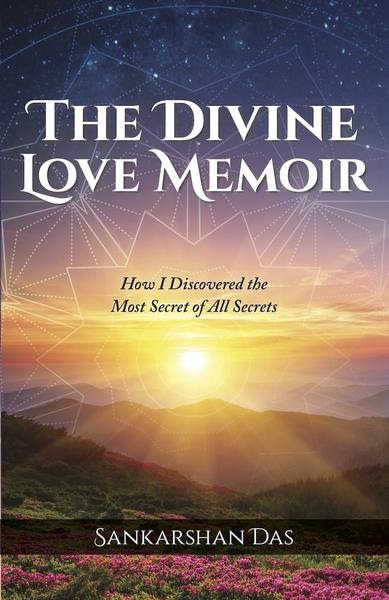
To get The Divine Love Memoir go to the Amazon store in your country:
Amazon.com
Amazon.in
Amazon.au
Amazon.ca
Amazon.com
Amazon.in
Amazon.au
Amazon.ca
or go the Amazon.com site in your country and search for The Divine Love Memoir


Comments
Post a Comment